
Knowing when ovulation occurs can make it easier to identify your fertile window and time intercourse when trying to conceive. But ovulation does not always happen on the same day every month, even when your menstrual cycles appear regular.
Fortunately, there are several ways to track ovulation, including menstrual-cycle tracking, cervical mucus changes, basal body temperature, ovulation predictor kits and, when necessary, medical monitoring.
If you are trying to conceive, understanding these methods can help you recognize your most fertile days. If your periods are irregular, ovulation tests repeatedly give confusing results, or pregnancy is not occurring despite correctly timed intercourse, a fertility evaluation may be more useful than relying on home tracking alone.
Jindal IVF Chandigarh provides fertility evaluation and infertility testing to help identify problems with ovulation and other factors that may affect conception.
What Is Ovulation?
Ovulation is the release of a mature egg from an ovary.
It usually occurs once during a menstrual cycle, although the exact timing can vary from person to person and from one cycle to another.
After ovulation, the egg remains capable of being fertilized for a relatively short period. Sperm, however, can survive in the female reproductive tract for several days under favorable conditions.
This is why pregnancy is possible from intercourse that occurs before ovulation as well as around the time of ovulation.
The fertile window is generally considered the six-day interval ending on the day of ovulation, with the highest chances of conception generally occurring when intercourse takes place in the days immediately before ovulation.
Why Is Tracking Ovulation Important When Trying to Get Pregnant?
You do not have an equal chance of conceiving on every day of your menstrual cycle.
Tracking ovulation can help you identify when you are most likely to be fertile so you can better time intercourse.
For couples trying to conceive, intercourse every 1–2 days during the fertile window is associated with the highest pregnancy rates. Having intercourse two to three times per week is also a reasonable approach for many couples.
However, ovulation tracking is not a guarantee of pregnancy.
Fertility also depends on factors such as:
-
Age
-
Egg quality
-
Sperm count and motility
-
Fallopian tube health
-
Uterine health
-
Hormonal health
-
Frequency and timing of intercourse
-
Underlying reproductive conditions
If you have been trying to conceive without success, infertility evaluation can help determine whether there is an underlying issue.
What Is the Fertile Window?
The fertile window is the period during which intercourse can result in pregnancy.
For practical purposes, it is generally considered the six days ending on the day of ovulation.
Because sperm can survive for several days and the egg remains viable for a shorter period after ovulation, intercourse in the days leading up to ovulation can be particularly important.
Example
If ovulation occurs around Day 14 of a particular cycle, the fertile window may begin several days earlier.
But this does not mean every woman with a 28-day cycle ovulates exactly on Day 14.
That is one of the biggest limitations of relying only on a calendar.
6 Ways to Track Ovulation
There is no single perfect ovulation-tracking method for everyone.
You can track ovulation using:
-
Menstrual-cycle tracking
-
Cervical mucus changes
-
Basal body temperature
-
Ovulation predictor kits
-
Physical signs and symptoms
-
Medical ovulation monitoring
Let's look at how each method works.
1. Track Your Menstrual Cycle
The simplest way to start tracking ovulation is to record the first day of every menstrual period.
Day 1 is the first day of menstrual bleeding.
You can record your cycle using:
-
A paper calendar
-
A period-tracking app
-
A fertility-tracking app
-
A digital health tracker
Over several months, you may begin to recognize your typical cycle length.
Can a Period App Predict Ovulation?
A period-tracking app can estimate when ovulation may occur based on previous cycle patterns.
However, it should be treated as an estimate rather than proof that ovulation has occurred.
Even women with apparently regular cycles can experience variation in the timing of ovulation. ASRM notes that calendar-based methods and apps have limitations when attempting to precisely predict an individual's ovulation day.
What If My Periods Are Irregular?
Calendar tracking becomes less reliable when cycles vary significantly from month to month.
Irregular periods may occur because of:
-
PCOS
-
Thyroid disorders
-
Changes in body weight
-
Excessive exercise
-
Stress
-
Perimenopause
-
Other hormonal conditions
If your periods are consistently irregular or absent, speak with a fertility specialist rather than relying exclusively on an app.
Jindal IVF provides female fertility treatment for conditions that can affect ovulation and conception.
2. Watch for Changes in Cervical Mucus
Cervical mucus changes throughout the menstrual cycle in response to hormonal changes.
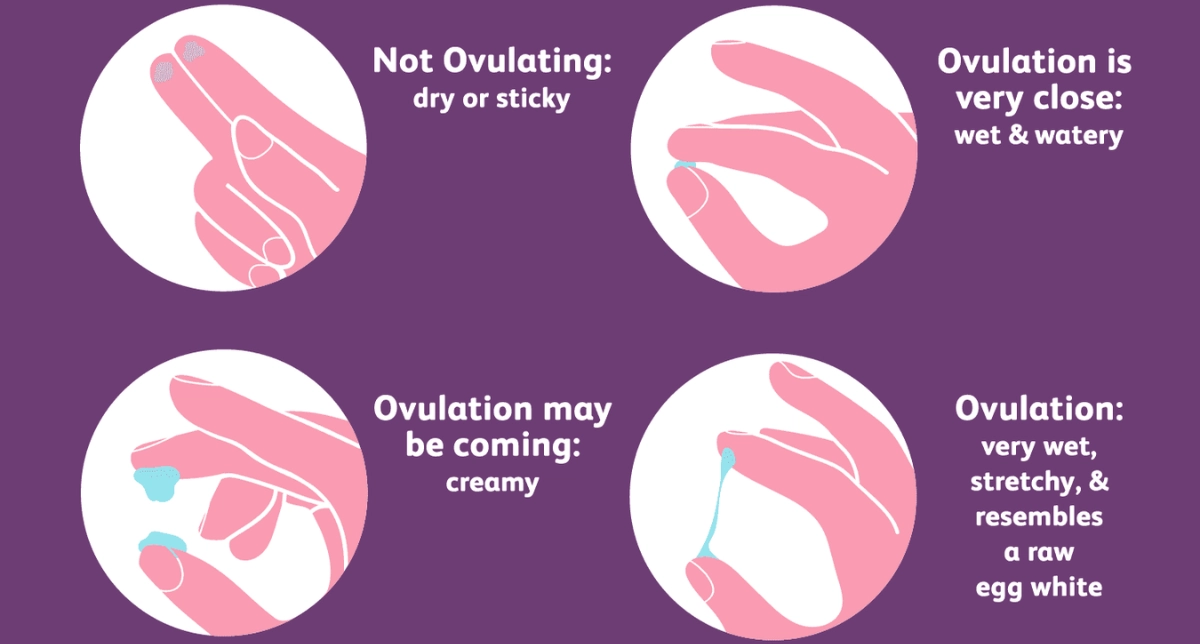
As ovulation approaches, cervical mucus often becomes:
-
Clearer
-
Wetter
-
More slippery
-
Stretchy
-
Similar in appearance or consistency to raw egg white
This type of mucus can be a useful sign that you are approaching your fertile period.
ASRM notes that slippery, clear cervical mucus is associated with increased fertility around ovulation.
Why Does Cervical Mucus Change?
Increasing estrogen levels before ovulation affect cervical secretions.
The mucus becomes more favorable for sperm movement through the reproductive tract.
You do not necessarily need to have a large amount of visible mucus for ovulation to occur, so the absence of a noticeable change does not automatically mean that you are not ovulating.
3. Track Your Basal Body Temperature
Basal body temperature (BBT) is your body's resting temperature.
After ovulation, hormonal changes—particularly the rise in progesterone—can cause a small increase in basal body temperature.
To track BBT:
-
Take your temperature every morning.
-
Measure it before getting out of bed.
-
Try to measure at approximately the same time each day.
-
Record the results consistently.
-
Look for a sustained temperature shift rather than focusing on one reading.
Can BBT Predict Ovulation?
BBT is generally more useful for confirming that ovulation has likely occurred than predicting it in real time.
This means that if you are trying to conceive, combining BBT with another method such as cervical mucus monitoring or an ovulation predictor kit may be more useful than relying on BBT alone.
Factors such as illness, poor sleep, alcohol consumption, travel and changes in measurement time can also affect temperature readings.
4. Use an Ovulation Predictor Kit
An ovulation predictor kit (OPK) is one of the most popular home methods for identifying the approach of ovulation.
Most OPKs detect luteinizing hormone (LH) in urine.
An LH surge generally occurs shortly before ovulation. Urinary LH testing can therefore provide indirect evidence that ovulation may occur within approximately 1–2 days.
How Does an Ovulation Test Work?
When LH levels rise, the test may show a positive result.
A positive test generally means that the LH surge has been detected and ovulation may be approaching.
However, an OPK does not directly prove that an egg was released.
It detects the hormonal signal associated with ovulation.
When Should You Start Using an Ovulation Test?
The appropriate testing day depends on your cycle length and the specific test instructions.
If you have a predictable cycle, you can estimate when ovulation is likely and begin testing before that period.
Follow the instructions supplied with the particular OPK because testing frequency and timing can differ between products.
Can Ovulation Tests Be Wrong?
Yes.
False-positive and false-negative results can occur.
For example, people with PCOS may have elevated or fluctuating LH levels that can make urinary LH tests more difficult to interpret. ASRM specifically notes that PCOS can produce false-positive urinary LH results.
So, if your OPK repeatedly shows positive results, never shows a surge, or conflicts with your cycle pattern, discuss this with a fertility specialist.
5. Pay Attention to Ovulation Symptoms
Some women notice physical changes around ovulation.
Possible signs include:
-
Increased cervical mucus
-
Mild lower abdominal or pelvic discomfort
-
Breast tenderness
-
Bloating
-
Increased libido
-
Changes in mood
-
A slight rise in basal body temperature
One-sided mid-cycle pelvic discomfort is sometimes called mittelschmerz.
However, not everyone experiences ovulation symptoms, and symptoms alone cannot reliably confirm that ovulation has occurred.
This is why combining symptoms with another tracking method can be more useful.
6. Consider Medical Ovulation Monitoring
If you have irregular cycles, infertility, suspected ovulation problems or repeated difficulty identifying your fertile window, your doctor may recommend medical monitoring.
Depending on your circumstances, this may involve:
-
Transvaginal ultrasound
-
Blood hormone testing
-
Progesterone testing
-
Other fertility investigations
A progesterone blood test, when performed at the appropriate time in the cycle, can provide evidence that ovulation has recently occurred. ASRM recommends timing progesterone testing based on the expected menstrual period rather than automatically using a fixed "Day 21" test for everyone.
Medical monitoring can provide considerably more information than a calendar or home ovulation test when an ovulation disorder is suspected.
Which Ovulation Tracking Method Is Best?
|
Method |
What It Shows |
Main Advantage |
Main Limitation |
|
Period tracking |
Estimated cycle pattern |
Simple and inexpensive |
Cannot reliably predict exact ovulation |
|
Cervical mucus |
Fertile-type secretions |
Free and natural |
Requires consistent observation |
|
BBT |
Temperature shift after ovulation |
Can help confirm ovulation |
Usually confirms ovulation after it occurs |
|
OPK |
LH surge |
Convenient and widely available |
Does not directly prove ovulation |
|
Symptoms |
Possible physical changes |
Easy to observe |
Not reliable on their own |
|
Ultrasound/hormonal tests |
Ovulation and follicular development |
More precise clinical assessment |
Requires medical supervision |
For many people, combining two methods can provide more useful information than relying on one method alone.
How to Track Ovulation to Get Pregnant
If your cycles are relatively predictable, you can create a simple tracking routine.
Step 1: Record Your Period
Mark the first day of menstrual bleeding as Day 1.
Continue tracking for several cycles.
Step 2: Estimate Your Fertile Period
Use your cycle history to estimate when ovulation might occur.
Remember that this is only an estimate.
Step 3: Watch for Fertile Cervical Mucus
Look for clear, slippery and stretchy cervical mucus as ovulation approaches.
Step 4: Use an Ovulation Predictor Kit
Start testing according to the instructions for your cycle and the specific product.
Step 5: Time Intercourse Around the Fertile Window
Rather than waiting for one "perfect" day, intercourse every 1–2 days during the fertile window can maximize the chance of conception.
Step 6: Seek Help If Tracking Is Not Working
If you cannot identify ovulation, your periods are irregular, or pregnancy does not occur despite appropriately timed intercourse, consider a fertility evaluation.
How to Track Ovulation With Irregular Periods
Tracking ovulation can be more challenging when your cycles are irregular.
For example, someone whose cycles vary from 25 days to 40 days cannot reliably assume that ovulation will occur on the same cycle day every month.
In this situation, a fertility specialist may evaluate possible causes such as:
-
PCOS
-
Thyroid problems
-
Elevated prolactin
-
Ovarian dysfunction
-
Perimenopause
-
Significant changes in body weight
-
Other hormonal disorders
Home OPKs may still provide useful information to some people, but they may also be harder to interpret.
If irregular periods are making it difficult to identify your fertile window, female infertility evaluation and treatment can help determine whether an ovulation disorder is present.
Ovulation Tracking and PCOS
PCOS is one of the common conditions associated with irregular or unpredictable ovulation.
Women with PCOS may have:
-
Irregular periods
-
Infrequent ovulation
-
No ovulation in some cycles
-
Difficulty predicting the fertile window
-
Elevated or fluctuating LH levels
Because PCOS can affect LH levels, some women may receive confusing results from urinary ovulation predictor kits.
If you have PCOS and are trying to conceive, do not assume that a negative or repeatedly positive OPK tells the complete story.
Your fertility specialist may recommend ultrasound monitoring, hormone testing or treatment to help identify and manage ovulation problems.
Can You Ovulate Without Getting a Positive Ovulation Test?
Yes.
A negative OPK does not necessarily mean that ovulation will not occur.
Possible explanations include:
-
Testing at the wrong time
-
A short LH surge
-
Diluted urine
-
Cycle-to-cycle variation
-
The test's sensitivity
-
Hormonal conditions such as PCOS
Similarly, a positive test does not guarantee that ovulation actually occurred.
Urinary LH testing is an indirect marker of ovulation.
If you repeatedly have unclear results, clinical evaluation can help establish whether you are ovulating.
Can You Get Pregnant Without Knowing When You Ovulate?
Yes.
You do not need to identify the exact moment of ovulation to conceive.
Because the fertile window extends over several days, regular intercourse throughout the likely fertile period can provide a good opportunity for conception.
In fact, trying to identify one exact "ovulation day" can sometimes create unnecessary stress.
For couples trying to conceive, intercourse every 1–2 days during the fertile window is an evidence-based approach.
What If You Are Tracking Ovulation but Still Cannot Get Pregnant?
Ovulation is only one part of fertility.
Even if you are successfully identifying your fertile window, conception can still be affected by:
-
Age
-
Egg quality
-
Sperm quality
-
Blocked fallopian tubes
-
Endometriosis
-
Uterine conditions
-
Ovulation disorders
-
Previous pelvic infections
-
Other reproductive or medical factors
This is why persistent difficulty conceiving should not automatically be attributed to "bad timing."
A complete fertility assessment may examine both partners.
Jindal IVF's infertility treatment and diagnostic services include evaluation of both male and female fertility factors.
When Should You See a Fertility Specialist?
Consider speaking with a fertility specialist if:
-
Your periods are irregular or absent
-
You cannot identify ovulation despite tracking
-
OPKs repeatedly produce confusing results
-
You have PCOS or suspected ovulation problems
-
You have endometriosis
-
You have a history of pelvic surgery or tubal problems
-
You have experienced recurrent pregnancy loss
-
You have a known or suspected male fertility problem
-
You have been trying to conceive for 12 months if under 35
-
You have been trying for 6 months if 35 or older
-
You are over 40 and want to become pregnant
Earlier evaluation may be appropriate when there are known fertility risk factors.
If a male factor may be contributing, Jindal IVF also provides male infertility treatment, including diagnostic evaluation and assisted reproductive options.
What Happens During a Fertility Evaluation?
A fertility evaluation does not automatically mean that you need IVF.
Your doctor may first review:
-
Menstrual-cycle history
-
Ovulation pattern
-
Previous pregnancies
-
Medical history
-
Medication use
-
Sexual and reproductive history
-
Sperm health
-
Ovarian function
-
Fallopian tube status
-
Uterine health
Depending on the findings, treatment could range from lifestyle and medication-based management to IUI or IVF.
Jindal IVF offers a range of infertility treatment options, including IUI, IVF, advanced IVF, fertility testing, male infertility and female infertility treatment.
Is IVF Needed If You Have an Ovulation Problem?
Not necessarily.
An ovulation disorder does not automatically mean that IVF is required.
Depending on the cause, treatment may include:
-
Lifestyle changes
-
Ovulation-inducing medication
-
Hormonal treatment
-
Timed intercourse
-
IUI
-
IVF in selected situations
For example, some women with ovulation disorders may benefit from ovulation induction before considering more advanced treatment.
If other fertility factors are present, your specialist may recommend IUI or IVF.
Jindal IVF provides IUI treatment as one of the available assisted reproductive options.
Tips for More Accurate Ovulation Tracking
To make your tracking more useful:
Track More Than One Cycle
One unusual cycle does not necessarily represent your normal pattern.
Be Consistent
Record your periods, symptoms and test results consistently.
Follow OPK Instructions
Different kits have different testing instructions. Follow the manufacturer's directions carefully.
Do Not Rely Only on an App
Apps can estimate fertile days, but they cannot guarantee exactly when you will ovulate.
Consider Your Medical History
PCOS, thyroid conditions, irregular periods and other factors can affect ovulation timing and test interpretation.
Do Not Obsess Over One Exact Day
The fertile window covers several days. You do not need to identify one precise hour of ovulation to have a chance of conceiving.
Ovulation Tracking: What You Really Need to Know
Tracking ovulation can be a useful tool when trying to conceive, but it should not become a source of unnecessary stress.
The most practical approach is to understand your menstrual cycle, watch for fertile cervical mucus, use an ovulation predictor kit when appropriate and have regular intercourse during the fertile window.
If your cycles are irregular, OPKs are repeatedly confusing, or pregnancy is not occurring despite appropriately timed intercourse, it may be time to move beyond home tracking and speak with a fertility specialist.
Ovulation is only one part of the fertility equation. A proper evaluation can identify whether another factor is affecting your chances of conception.
Jindal IVF Chandigarh provides comprehensive fertility evaluation and treatment options, from diagnosis and ovulation management to IUI and IVF treatment.
Frequently Asked Questions
How do I know when I am ovulating?
Common signs include clear, slippery cervical mucus, a positive ovulation predictor test, a small sustained rise in basal body temperature after ovulation and, in some women, mild mid-cycle pelvic discomfort. No single symptom can confirm ovulation in every person.
What is the best way to track ovulation?
There is no single best method for everyone. Combining cycle tracking with cervical mucus monitoring or an ovulation predictor kit can provide useful information. Medical monitoring may be more appropriate if you have irregular cycles or fertility concerns.
How many days after your period do you ovulate?
There is no universal day on which every woman ovulates. Ovulation depends on the length and variation of the individual menstrual cycle. Calendar calculations provide estimates rather than confirmation.
Can an ovulation test tell me exactly when I will ovulate?
An ovulation predictor kit detects the LH surge that usually precedes ovulation by approximately 1–2 days. It provides indirect evidence that ovulation may be approaching rather than proving exactly when the egg will be released.
Can I track ovulation with an app?
Yes, a period or fertility app can help record cycle patterns and estimate fertile days. However, app-based calendar predictions may not accurately identify the exact day of ovulation, particularly when cycles vary.
What does cervical mucus look like during ovulation?
Around the fertile period, cervical mucus may become clear, slippery and stretchy, sometimes resembling raw egg white. This can be a useful sign that ovulation is approaching.
Does basal body temperature confirm ovulation?
A sustained rise in basal body temperature can provide evidence that ovulation has likely occurred. However, BBT generally confirms ovulation after the temperature shift rather than predicting it in advance.
Can PCOS affect ovulation tests?
Yes. PCOS can be associated with elevated or fluctuating LH levels, which may make urinary ovulation predictor tests more difficult to interpret and can produce false-positive results.
Can you ovulate without having symptoms?
Yes. Many women do not notice obvious physical symptoms when ovulating. Lack of symptoms does not necessarily mean that ovulation is not occurring.
What if I cannot identify my ovulation day?
If you repeatedly cannot identify ovulation, particularly if your periods are irregular, speak with a fertility specialist. Hormonal testing and ultrasound monitoring may provide a more accurate assessment.
How often should you have sex during the fertile window?
Intercourse every 1–2 days during the fertile window is associated with the highest pregnancy rates. Intercourse two to three times per week may also be nearly equivalent for many couples.
When should I see a fertility specialist?
If you are under 35, evaluation is generally recommended after 12 months of trying without pregnancy. If you are 35 or older, evaluation is generally recommended after six months. Earlier assessment may be appropriate if you have irregular periods, known fertility problems or other risk factors.
Does tracking ovulation guarantee pregnancy?
No. Tracking ovulation can help improve the timing of intercourse, but pregnancy also depends on egg quality, sperm health, fallopian tubes, the uterus, age and other factors.
Will I need IVF if I have an ovulation problem?
Not necessarily. Depending on the cause, treatment may include lifestyle changes, medication, ovulation induction, IUI or IVF. A fertility specialist can recommend the appropriate option after evaluating the underlying cause.