
Finding out that you have a low AMH level can be worrying, especially if you are trying to conceive. Many women immediately wonder: Can you get pregnant with low AMH?
The answer is yes, low AMH does not automatically mean that pregnancy is impossible.
AMH, or anti-Müllerian hormone, is primarily used as a marker of ovarian reserve, which refers to the remaining pool of eggs in the ovaries. However, AMH does not directly measure egg quality and should not be used on its own to determine whether a woman can or cannot become pregnant. Age, ovulation, fallopian tube health, sperm quality and other reproductive factors also influence the chances of conception.
If you have received a low AMH result, understanding what the number actually means,and what it does not mean,can help you make informed decisions about your fertility.
What Is AMH?
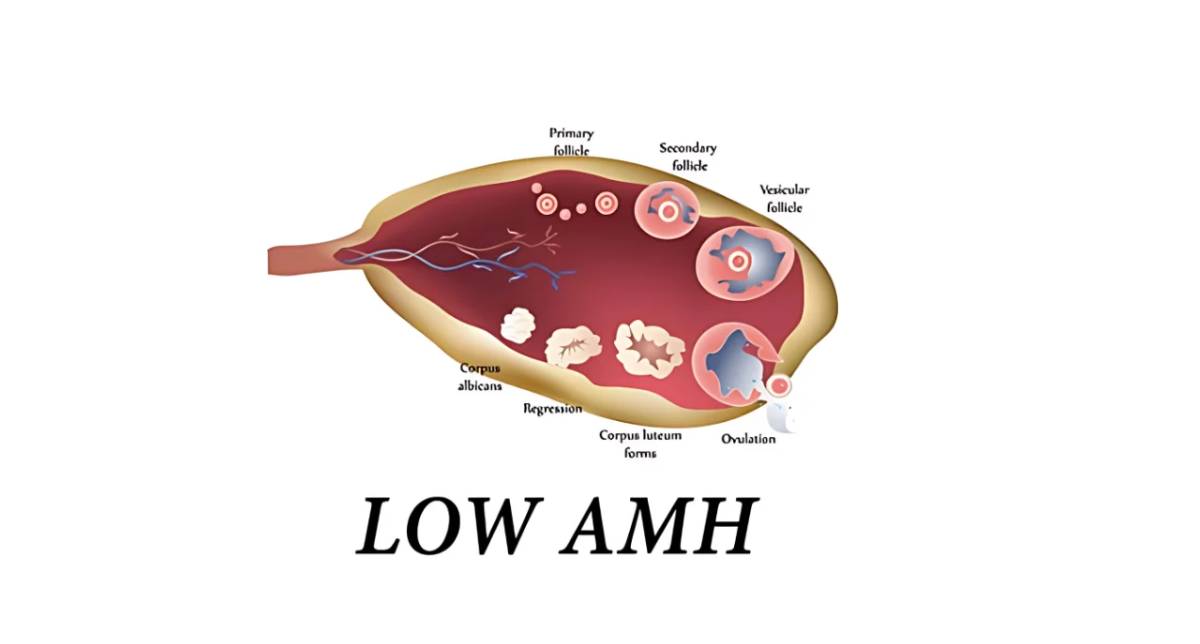
Anti-Müllerian hormone (AMH) is produced by small follicles in the ovaries. The level of AMH in the blood provides an estimate of the number of developing follicles and is therefore commonly used as a marker of ovarian reserve.
AMH can be measured at different points during the menstrual cycle and is relatively consistent compared with some other ovarian reserve markers.
However, ovarian reserve and fertility are not the same thing.
Ovarian reserve mainly relates to the quantity of eggs remaining, while fertility also depends on factors such as:
-
Age
-
Egg quality
-
Ovulation
-
Sperm quality
-
Fallopian tube function
-
Uterine health
-
Overall reproductive health
This distinction is important when interpreting a low AMH result.
What Does Low AMH Mean?
A low AMH level generally suggests that the number of remaining ovarian follicles may be lower than expected for a particular age group.
It may be associated with diminished ovarian reserve (DOR), but the result needs to be interpreted in the context of the woman's age, menstrual history, ultrasound findings and other fertility factors.
A low AMH level can be particularly useful when planning fertility treatment because it may help a fertility specialist anticipate how the ovaries could respond to ovarian stimulation during IVF.
However, ASRM states that ovarian reserve tests are better at predicting oocyte yield during ovarian stimulation than predicting natural reproductive potential.
Can You Get Pregnant With Low AMH?
Yes, pregnancy is possible with low AMH.
A low AMH result does not mean that there are no eggs available, nor does it mean that natural pregnancy cannot occur.
Research reviewed by ASRM found that women with low AMH levels did not necessarily have lower cumulative pregnancy rates than women with normal AMH levels in certain prospective studies. ASRM therefore states that ovarian reserve markers are poor independent predictors of reproductive potential.
However, this does not mean that AMH is irrelevant.
A low AMH may indicate a smaller ovarian reserve and can be important when considering how much time may be available for family planning or how the ovaries might respond to fertility treatment.
The most appropriate interpretation depends on the complete fertility picture.
Does Low AMH Mean Poor Egg Quality?
Not necessarily.
AMH primarily provides information about ovarian reserve, not egg quality.
Egg quality is strongly associated with age, and age is a more important predictor of reproductive success than ovarian reserve testing alone.
Therefore, a woman with low AMH may still have eggs capable of fertilisation and healthy embryo development.
Similarly, a normal AMH level does not guarantee good egg quality or pregnancy.
This is why AMH should not be interpreted as a simple “fertility score.”
What Are the Causes of Low AMH?
AMH naturally tends to decline with age as the ovarian follicle pool decreases.
Other factors may also be associated with lower ovarian reserve, including:
-
Increasing age
-
Previous ovarian surgery
-
Certain genetic conditions
-
Some ovarian conditions
-
Certain reproductive health conditions
-
Individual differences in ovarian reserve
In some women, the reason for a low AMH may not be immediately clear.
A single AMH result should therefore be discussed with a fertility specialist rather than interpreted in isolation.
What Is Considered a Low AMH Level?
There is no single AMH number that means the same thing for every woman.
Laboratory methods, units and reference ranges can vary. A result also needs to be interpreted alongside age and other fertility findings.
For this reason, it is not appropriate to assume that a specific AMH number automatically means that natural pregnancy is impossible.
Your fertility specialist may consider:
-
AMH level
-
Age
-
Antral follicle count (AFC)
-
Menstrual cycle pattern
-
Ovulation
-
FSH and estradiol when appropriate
-
Previous pregnancy history
-
Fallopian tube status
-
Semen analysis
-
Previous fertility treatment
ASRM recommends interpreting ovarian reserve tests within the context of the woman's overall clinical picture rather than using them as a standalone measure of fertility.
Low AMH and Natural Pregnancy
One of the most common questions after receiving a low AMH result is whether natural conception is still possible.
In many cases, yes.
If a woman is ovulating and has an available egg, natural conception can still occur. The possibility of pregnancy also depends on factors such as age, sperm quality and whether the fallopian tubes are open.
Importantly, studies reviewed by ASRM have found that AMH levels alone do not reliably predict the likelihood of natural conception.
This means a low AMH result should not automatically be interpreted as infertility.
Can Low AMH Cause Infertility?
Low AMH itself is not necessarily the direct cause of infertility.
Instead, it can indicate reduced ovarian reserve. Some women with diminished ovarian reserve may have difficulty conceiving, while others may conceive naturally.
Other fertility factors can be more directly responsible for difficulty becoming pregnant.
For example, a woman may have low AMH and normal ovulation, while another woman may have a normal AMH but a blocked fallopian tube or an ovulation disorder.
This is why a complete fertility assessment is important.
Does Low AMH Affect Ovulation?
Not necessarily.
AMH measures ovarian reserve, while ovulation refers to the release of an egg from the ovary.
A woman can have a low AMH and continue to have regular menstrual cycles and ovulate.
However, ovarian reserve can decline before noticeable changes occur in menstrual cycles. Therefore, regular periods do not necessarily tell you how many eggs remain, just as low AMH does not automatically mean that you are not ovulating.
How Is Low AMH Diagnosed?
Low AMH is identified through a blood test.
However, doctors usually do not rely on AMH alone when assessing ovarian reserve.
A fertility evaluation may include:
1. AMH Blood Test
The AMH test measures the concentration of anti-Müllerian hormone in the blood.
2. Antral Follicle Count
Antral follicle count (AFC) is assessed using transvaginal ultrasound and estimates the number of small follicles visible in the ovaries.
AMH and AFC are currently among the commonly used markers of ovarian reserve.
3. FSH and Estradiol
Depending on the clinical situation, early-cycle FSH and estradiol may provide additional information about ovarian function.
4. Medical and Menstrual History
Your doctor may ask about:
-
Period regularity
-
Previous pregnancies
-
Previous miscarriages
-
Pelvic surgery
-
Endometriosis
-
Previous chemotherapy or radiation
-
Family history
-
Previous fertility treatment
5. Other Fertility Tests
Depending on the individual situation, evaluation may also include:
-
Ovulation assessment
-
Fallopian tube testing
-
Uterine evaluation
This broader evaluation is important because pregnancy depends on more than ovarian reserve.
What Are the Treatment Options for Low AMH?
There is no single treatment that works for every woman with low AMH.
Treatment depends on age, ovarian reserve, ovulation, sperm parameters, fallopian tube health, duration of infertility and whether pregnancy is desired now or in the future.
1. Trying to Conceive Naturally
For women who are ovulating and have no other identified fertility problems, natural conception may still be possible.
Because fertility declines with age, however, women with diminished ovarian reserve may benefit from discussing their reproductive plans with a fertility specialist rather than delaying evaluation unnecessarily.
ASRM notes that female age is the strongest single predictor of fecundity and that ovarian reserve testing should supplement,not replace,assessment based on age and diagnosis.
2. Ovulation Tracking
Identifying the fertile window can help couples time intercourse around ovulation.
The fertile window generally includes the days leading up to ovulation and the day of ovulation.
Ovulation predictor kits, cervical mucus changes and cycle tracking can provide useful information, although they do not address other potential causes of infertility.
3. Fertility Medicines
If a woman has an ovulation problem, medication may be recommended to help induce or regulate ovulation.
However, fertility medicines do not simply “increase AMH.” Treatment should focus on the underlying fertility issue and the individual's reproductive goals.
4. IUI
Intrauterine insemination (IUI) involves placing prepared sperm directly into the uterus around the time of ovulation.
Whether IUI is appropriate depends on factors such as:
-
Age
-
Ovulation
-
Sperm quality
-
Fallopian tube status
-
Duration of infertility
-
Other reproductive factors
5. IVF
In vitro fertilisation (IVF) may be considered when natural conception or simpler treatments are unlikely to be suitable or have not been successful.
During IVF, medication is used to stimulate the ovaries, eggs are retrieved, and fertilisation takes place in a laboratory. The resulting embryo may then be transferred to the uterus.
Low AMH can help doctors anticipate the likely ovarian response and number of eggs retrieved during stimulation. However, low AMH should not automatically be used to rule out IVF treatment. ASRM specifically notes that extremely low AMH should not be used as the sole reason to refuse treatment.
6. IVF With Individualised Stimulation
Women with low ovarian reserve may respond differently to ovarian stimulation.
A fertility specialist may therefore individualise the stimulation protocol based on:
-
AMH
-
AFC
-
Age
-
Previous IVF response
-
Medical history
-
Other fertility factors
The goal is to create a treatment plan that matches the woman's individual circumstances rather than focusing on the AMH number alone.
Can You Increase AMH Naturally?
This is one of the most searched questions after receiving a low AMH result.
There is currently no proven lifestyle method that reliably restores ovarian reserve or permanently increases the number of eggs in the ovaries.
A healthy lifestyle can support overall reproductive and general health, including:
-
Maintaining a healthy weight
-
Avoiding smoking
-
Limiting excessive alcohol
-
Exercising appropriately
-
Managing chronic health conditions
-
Getting adequate sleep
However, these habits should not be presented as a way to “reverse” diminished ovarian reserve.
It is also important to be cautious about supplements marketed as products that can dramatically increase AMH or restore fertility. Discuss any fertility supplement with your doctor before taking it.
Does Low AMH Mean IVF Will Not Work?
No.
AMH can help predict how many eggs may be obtained following ovarian stimulation, but it is a much weaker independent predictor of pregnancy and live birth. Other factors,including age, sperm quality, embryo development and laboratory and treatment factors,also influence IVF outcomes.
Therefore, a low AMH result does not automatically mean that IVF cannot result in pregnancy.
It does mean that your fertility specialist may discuss the possibility of a lower response to ovarian stimulation and the potential for fewer eggs to be retrieved.
Can Low AMH Cause Miscarriage?
Low AMH alone should not be considered a direct explanation for miscarriage.
AMH primarily reflects ovarian reserve. Pregnancy loss can have many different causes, and age is an important factor in reproductive outcomes.
If you have experienced recurrent pregnancy loss, your doctor may recommend a separate evaluation to identify possible causes.
Low AMH and Pregnancy After 35
Age becomes particularly important when interpreting a low AMH result after 35.
Both ovarian reserve and fertility generally decline with age, but AMH and age provide different information.
A low AMH at a younger age does not necessarily have the same implications as a low AMH at an older age.
Women aged 35 or older who have been trying to conceive for six months without pregnancy are generally advised to seek fertility evaluation sooner than younger women. Earlier assessment may be appropriate when there are known fertility concerns.
When Should You See a Fertility Specialist?
Consider a fertility consultation if:
-
You have been trying to conceive without success.
-
You have received a low AMH result.
-
Your periods are irregular or absent.
-
You have a history of ovarian surgery.
-
You have endometriosis or another reproductive health condition.
-
You have previously undergone chemotherapy or radiation.
-
You are 35 or older and have been trying to conceive for six months.
-
You are over 40 and want to become pregnant.
-
You have experienced recurrent pregnancy loss.
-
You are considering fertility preservation.
A fertility specialist can interpret AMH alongside your age, AFC, medical history and other fertility tests.
Frequently Asked Questions About Low AMH and Pregnancy
Can you get pregnant naturally with low AMH?
Yes. Low AMH does not automatically prevent natural pregnancy. AMH is primarily a marker of ovarian reserve and is not a standalone test of natural fertility.
What is the lowest AMH level to get pregnant?
There is no single AMH value below which pregnancy is impossible. AMH results must be interpreted alongside age, ovulation, sperm quality, fallopian tube health and other fertility factors.
Does low AMH mean I have no eggs left?
No. A low AMH suggests a reduced ovarian reserve, but it does not mean that there are no eggs remaining.
Can low AMH be treated?
The AMH number itself is not usually the target of treatment. Instead, doctors focus on the underlying fertility situation and the woman's reproductive goals. Treatment may include timed intercourse, ovulation treatment, IUI or IVF depending on the circumstances.
Can I increase my AMH naturally?
There is no proven lifestyle method that reliably restores the ovarian egg supply or permanently increases ovarian reserve. Healthy lifestyle habits can support overall health but should not be considered a treatment for diminished ovarian reserve.
Is low AMH a sign of poor egg quality?
Not necessarily. AMH primarily reflects ovarian reserve rather than egg quality. Age is a more important predictor of reproductive success than AMH alone.
Is IVF possible with very low AMH?
Yes. Very low AMH may indicate a lower expected response to ovarian stimulation, but ASRM states that extremely low AMH should not by itself be used to refuse IVF treatment.
Does low AMH mean early menopause?
Not necessarily. Low AMH can indicate reduced ovarian reserve, but it cannot by itself determine exactly when menopause will occur.
Should I worry if my AMH is low?
A low result deserves appropriate medical interpretation, but it should not automatically be viewed as a diagnosis of infertility. Discuss the result with a fertility specialist who can consider your age, menstrual history, AFC and other reproductive factors.
Final Takeaway
A diagnosis of low AMH does not mean that pregnancy is impossible.
AMH is primarily a marker of ovarian reserve and can provide useful information about how the ovaries may respond to fertility treatment. However, it does not measure egg quality and cannot independently predict whether a woman will become pregnant naturally.
If you have low AMH, the most useful next step is to look at the complete fertility picture,including age, ovulation, antral follicle count, fallopian tube health, sperm quality and your reproductive history.
Depending on these factors, pregnancy may occur naturally, or treatments such as ovulation management, IUI or IVF may be considered.
If you are concerned about your AMH level or have been trying to conceive without success, a fertility specialist can help you understand what your result means for your individual fertility situation rather than relying on the AMH number alone.
Medical disclaimer: This article is intended for general educational purposes and does not replace personalised medical advice, diagnosis or treatment from a qualified fertility specialist.