
If your doctor has mentioned ovarian reserve testing, or you have come across the term while researching fertility, you may have seen conflicting explanations.
Some sources make ovarian reserve sound like a fertility score that can tell you whether you will become pregnant. Others describe it only as an estimate of how many eggs remain in the ovaries.
The reality is more specific.
Ovarian reserve testing can provide useful information about the remaining egg supply and how the ovaries may respond to fertility medications. However, it cannot directly measure egg quality or accurately predict whether someone will conceive naturally.
At IVF Chandigarh, ovarian reserve testing is used as one part of a broader fertility evaluation, rather than as a stand-alone measure of fertility.
What Is an Ovarian Reserve?
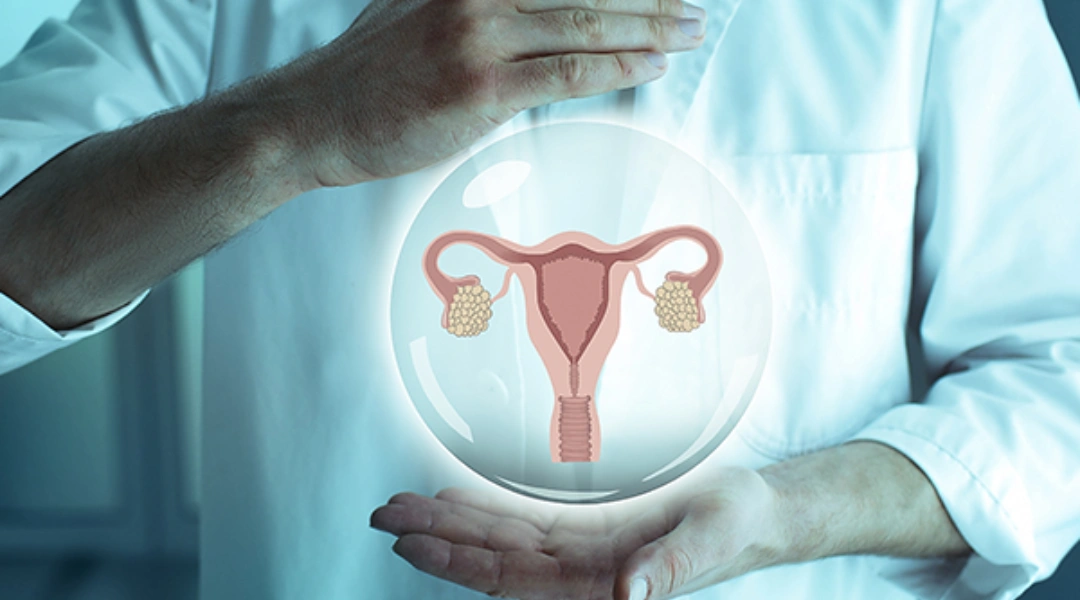
Ovarian reserve refers to the number of eggs, or oocytes, remaining in the ovaries.
Women are born with a finite number of eggs. The number gradually declines throughout life as part of the natural reproductive ageing process.
This is different from egg quality.
Ovarian reserve mainly relates to egg quantity, while egg quality refers broadly to an egg's ability to mature normally, fertilize, and contribute to the development of a healthy embryo.
A woman may have a lower ovarian reserve and still produce healthy eggs. Similarly, having a high ovarian reserve does not guarantee that every egg will be chromosomally normal or result in pregnancy.
Age remains one of the most important factors associated with reproductive potential and embryo chromosome abnormalities.
How Is Ovarian Reserve Assessed?
Ovarian reserve can be assessed using blood tests and ultrasound.
The most commonly used markers are Anti-Müllerian Hormone, or AMH, and Antral Follicle Count, or AFC. FSH and estradiol may also provide additional information in certain situations.
AMH: Anti-Müllerian Hormone
AMH is produced by small follicles in the ovaries.
It is one of the most commonly used markers for estimating ovarian reserve and predicting how the ovaries may respond to stimulation during IVF.
Unlike some other reproductive hormones, AMH can generally be measured at different points in the menstrual cycle.
However, AMH values can be affected by factors such as age, laboratory methods and hormonal contraceptive use, so the result should always be interpreted in the appropriate clinical context.
A low AMH level does not mean that natural pregnancy is impossible, and a high AMH level does not guarantee fertility.
AFC: Antral Follicle Count
Antral Follicle Count is assessed using a transvaginal ultrasound.
During the scan, the doctor counts the small follicles visible in both ovaries, usually during the early part of the menstrual cycle.
AFC provides information similar to AMH and can help estimate ovarian reserve and predict the likely response to ovarian stimulation.
The accuracy of AFC can depend partly on ultrasound technique and the experience of the person performing the scan.
FSH and Estradiol
Follicle-Stimulating Hormone, or FSH, is usually measured during the early follicular phase of the menstrual cycle, often together with estradiol.
FSH may rise as ovarian reserve declines, but it is generally less sensitive than AMH and AFC for detecting changes in ovarian reserve.
It may still provide useful supporting information when interpreted alongside other findings.
What About the Clomiphene Citrate Challenge Test?
The Clomiphene Citrate Challenge Test, sometimes called CCCT, was previously used to assess ovarian reserve.
It involves measuring FSH levels before and after taking clomiphene citrate.
However, current fertility guidance does not recommend CCCT as a routine ovarian reserve test because it does not provide meaningful advantages over simpler tests such as AMH, AFC and basal FSH.
It has therefore largely been replaced in modern fertility practice.
What Can Ovarian Reserve Testing Tell You?
Ovarian reserve tests are particularly useful in fertility treatment.
AMH and AFC can help fertility specialists estimate how the ovaries may respond to ovarian stimulation and approximately how many eggs may be obtained during an IVF cycle.
This information can help doctors:
-
plan an ovarian stimulation protocol
-
select an appropriate starting medication dose
-
estimate the likelihood of a low or excessive ovarian response
-
counsel patients about the expected number of eggs that may be retrieved
-
discuss fertility preservation strategies where appropriate
Ovarian reserve testing is therefore valuable when used for the right purpose.
What Can't Ovarian Reserve Testing Tell You?
Ovarian reserve tests have important limitations.
They cannot reliably tell you:
-
whether you will become pregnant naturally
-
the quality of your individual eggs
-
whether your eggs are chromosomally normal
-
whether your fallopian tubes are open
-
whether ovulation is occurring normally
-
whether sperm factors are affecting fertility
-
whether an embryo will implant successfully
-
whether a pregnancy will result in a live birth
In simple terms, ovarian reserve testing provides information about egg quantity and expected ovarian response, not a complete assessment of fertility.
A low ovarian reserve result does not mean that natural pregnancy is impossible, and a normal result does not guarantee pregnancy.
Does Low AMH Mean Low Fertility?
Not necessarily.
AMH is much better at predicting ovarian response during fertility treatment than predicting an individual's chance of natural conception.
Prospective studies involving women without known infertility have found that low AMH alone does not reliably predict a lower chance of becoming pregnant naturally in the short term.
Natural fertility depends on many factors, including:
-
age
-
whether ovulation is occurring normally
-
fallopian tube health
-
uterine factors
-
sperm quality
-
timing and frequency of intercourse
-
reproductive and medical history
This is why AMH should never be interpreted as a stand-alone fertility score.
Does Ovarian Reserve Testing Measure Egg Quality?
No.
Ovarian reserve tests primarily assess egg quantity rather than the developmental competence of individual eggs.
There is currently no routine blood test or ultrasound that can directly measure the overall quality of individual eggs.
During IVF, doctors and embryologists can obtain additional information by observing egg maturity, fertilization and embryo development.
However, even these outcomes are influenced by more than the egg alone. Sperm factors, genetics, laboratory conditions and normal biological variation can also affect fertilization and embryo development.
Age remains one of the strongest routinely available indicators associated with egg and embryo chromosome abnormalities.
Understanding Your Ovarian Reserve Results
There is no single AMH, AFC or FSH number that can provide a complete assessment of fertility.
Reference values can vary depending on:
-
age
-
laboratory methods
-
the AMH assay used
-
ultrasound technique
-
menstrual cycle factors
-
medical history
-
hormonal medications
-
the reason testing was performed
For this reason, ovarian reserve results should not be interpreted using a universal "normal" or "abnormal" number found online.
AMH and AFC can also sometimes provide different impressions in the same patient.
A fertility specialist should therefore interpret ovarian reserve results together with age, medical history, menstrual cycles, reproductive goals and any other relevant fertility investigations.
When Is Ovarian Reserve Testing Useful?
Ovarian reserve testing can be helpful in several situations.
During an Infertility Evaluation
For couples having regular unprotected intercourse without a known fertility problem, evaluation is generally recommended after:
-
12 months of trying when the female partner is younger than 35
-
6 months of trying when the female partner is 35 or older
For women over 40, earlier evaluation may be appropriate.
Evaluation may also be started sooner if there are known fertility concerns.
Ovarian reserve testing may be included as part of this broader assessment when clinically appropriate.
Before IVF
AMH and AFC are particularly useful before IVF because they can help predict the likely ovarian response to stimulation.
This helps the fertility specialist plan treatment more appropriately.
Before Fertility Preservation
Ovarian reserve testing can help estimate how many eggs might be obtained during an egg-freezing cycle.
However, AMH should not be used alone to decide whether someone should freeze their eggs.
Age at the time of freezing and future reproductive plans are generally more important when discussing the likelihood of future success.
When There Are Risk Factors for Reduced Ovarian Reserve
Testing may also be useful in people with medical factors that could affect ovarian reserve, including:
-
previous ovarian surgery
-
chemotherapy
-
pelvic radiation
-
some cases of endometriosis
-
a family history of premature ovarian insufficiency or early menopause
-
medical conditions that may affect ovarian function
The appropriate evaluation will depend on the individual's history.
Should You Get an AMH Test Just to Check Your Fertility?
For women who are not experiencing infertility and are not preparing for fertility treatment, ovarian reserve tests are not recommended as stand-alone screening tests for natural fertility.
An AMH test cannot tell you exactly how much reproductive time you have left.
It also cannot reliably predict how quickly you will become pregnant naturally.
A normal AMH result should therefore not create false reassurance, while a low result should not automatically cause unnecessary anxiety.
If you are concerned about delaying pregnancy or want to understand your reproductive options, a consultation that considers your age, medical history and reproductive plans is usually more useful than relying on an AMH number alone.
What Does a Low Ovarian Reserve Result Mean?
A low ovarian reserve result usually means that fewer eggs may be available or that the ovaries may produce fewer eggs in response to stimulation.
It does not mean pregnancy is impossible.
It also does not automatically mean that the remaining eggs are poor quality.
Even a very low AMH level should not, by itself, be used as a reason to deny someone fertility treatment.
Instead, the result may help the doctor discuss realistic expectations about the number of eggs that might be obtained during an IVF cycle and whether the treatment strategy should be adjusted.
Depending on age, reproductive history, treatment goals and other fertility factors, options may include:
-
proceeding with IVF
-
adjusting the ovarian stimulation approach
-
using ICSI when there is an appropriate fertilization or sperm-related indication
-
discussing egg freezing where appropriate
-
considering fertility preservation before medical treatment that may affect the ovaries
-
discussing donor eggs in selected situations where the expected chance of success using a patient's own eggs is very low
The appropriate option varies considerably between individuals.
What Does a Normal Ovarian Reserve Result Mean?
A normal AMH or AFC result can suggest that the ovaries are likely to respond reasonably well to fertility medications.
However, it does not guarantee fertility or pregnancy.
A normal ovarian reserve result does not confirm that:
-
every egg is chromosomally normal
-
the fallopian tubes are open
-
ovulation is occurring regularly
-
the uterus is normal
-
sperm parameters are normal
-
fertilization will occur
-
embryo implantation will occur
Fertility depends on multiple reproductive factors working together.
Ovarian reserve is only one part of the picture.
Can You Increase Ovarian Reserve?
There is currently no proven treatment, diet or supplement that restores the number of eggs lost through normal ovarian ageing.
Women are born with a finite number of eggs, and ovarian reserve naturally declines over time.
A healthy lifestyle may support overall reproductive and pregnancy health, but supplements should not be marketed as a way to regenerate eggs or permanently increase ovarian reserve.
Ovarian Reserve and Egg Freezing
Women considering egg freezing often undergo AMH testing and antral follicle counting.
These tests are useful because they can help estimate how many eggs might be obtained during one stimulation cycle.
However, they cannot guarantee how many frozen eggs will eventually result in embryos, pregnancies or live births.
Age at the time the eggs are frozen is particularly important because egg and embryo chromosome abnormalities become more common with reproductive ageing.
For this reason, decisions about planned egg freezing should consider age, reproductive goals, expected ovarian response, medical history and personal circumstances rather than AMH alone.
Frequently Asked Questions
Does Ovarian Reserve Testing Tell Me My Egg Quality?
No.
Ovarian reserve tests such as AMH and AFC primarily estimate egg quantity and expected ovarian response.
They do not directly measure whether individual eggs are chromosomally normal or capable of producing a healthy embryo.
Can I Increase My AMH?
Some factors can temporarily influence measured AMH levels, but there is no established treatment that restores the underlying ovarian reserve or regenerates lost eggs.
The goal should not simply be to increase an AMH number.
Your doctor should interpret the result in the context of your age, reproductive history and treatment goals.
If My AMH Is Low, Can I Still Get Pregnant Naturally?
Yes, natural pregnancy may still be possible.
Low AMH mainly indicates reduced ovarian reserve and may predict a lower response to ovarian stimulation.
It does not, by itself, determine whether natural conception can occur.
Does Low AMH Mean Poor Egg Quality?
No.
Low AMH primarily indicates lower ovarian reserve.
Age is more closely associated with the likelihood of egg and embryo chromosome abnormalities than AMH alone.
Does High AMH Mean I Am Very Fertile?
No.
A higher AMH level usually indicates a larger pool of follicles, but it does not guarantee natural pregnancy or normal egg quality.
High AMH levels are also commonly seen in women with PCOS.
Should I Get AMH Tested If I Am Not Trying to Conceive?
Routine ovarian reserve testing should not be used as a general fertility screening test in women without infertility.
If you are considering delaying pregnancy or fertility preservation, discussing your age, reproductive goals and medical history with a fertility specialist may be more useful than interpreting AMH alone.
Is the Clomiphene Citrate Challenge Test Still Recommended?
It is generally no longer recommended as a routine ovarian reserve test.
Modern assessment usually relies on markers such as AMH, AFC and, when appropriate, FSH and estradiol.
What Is the Difference Between AMH and AFC?
Both provide information about ovarian reserve and can help predict ovarian response during IVF.
AMH is measured through a blood test, while AFC is assessed using ultrasound.
They often provide similar information, although results can occasionally differ.
Your doctor may use one or both depending on the clinical situation.
Can Low Ovarian Reserve Be Treated?
There is no established treatment that restores lost ovarian reserve.
Treatment instead focuses on making appropriate use of the remaining ovarian function and selecting fertility options according to the patient's age, reproductive goals and individual clinical situation.
The Bottom Line
Ovarian reserve testing is an important fertility tool, but it answers a more specific question than many people realise.
AMH, AFC and related tests mainly help doctors estimate the remaining egg supply and predict how the ovaries may respond to fertility medications.
They do not directly measure egg quality, guarantee pregnancy or provide a complete assessment of natural fertility.
A low AMH result does not mean that pregnancy is impossible, while a normal or high AMH result does not guarantee fertility.
The most useful assessment combines ovarian reserve testing, when appropriate, with age, menstrual and reproductive history, medical history, sperm evaluation and other fertility investigations.
At IVF Chandigarh, our fertility specialists use AMH, AFC and other diagnostic tools as part of an individualized fertility evaluation. We help patients understand what their results mean in the context of their age, reproductive history and future plans rather than relying on a single laboratory number.
If you are experiencing difficulty conceiving, considering IVF or planning fertility preservation, you can book a consultation to discuss your individual fertility assessment and treatment options.